
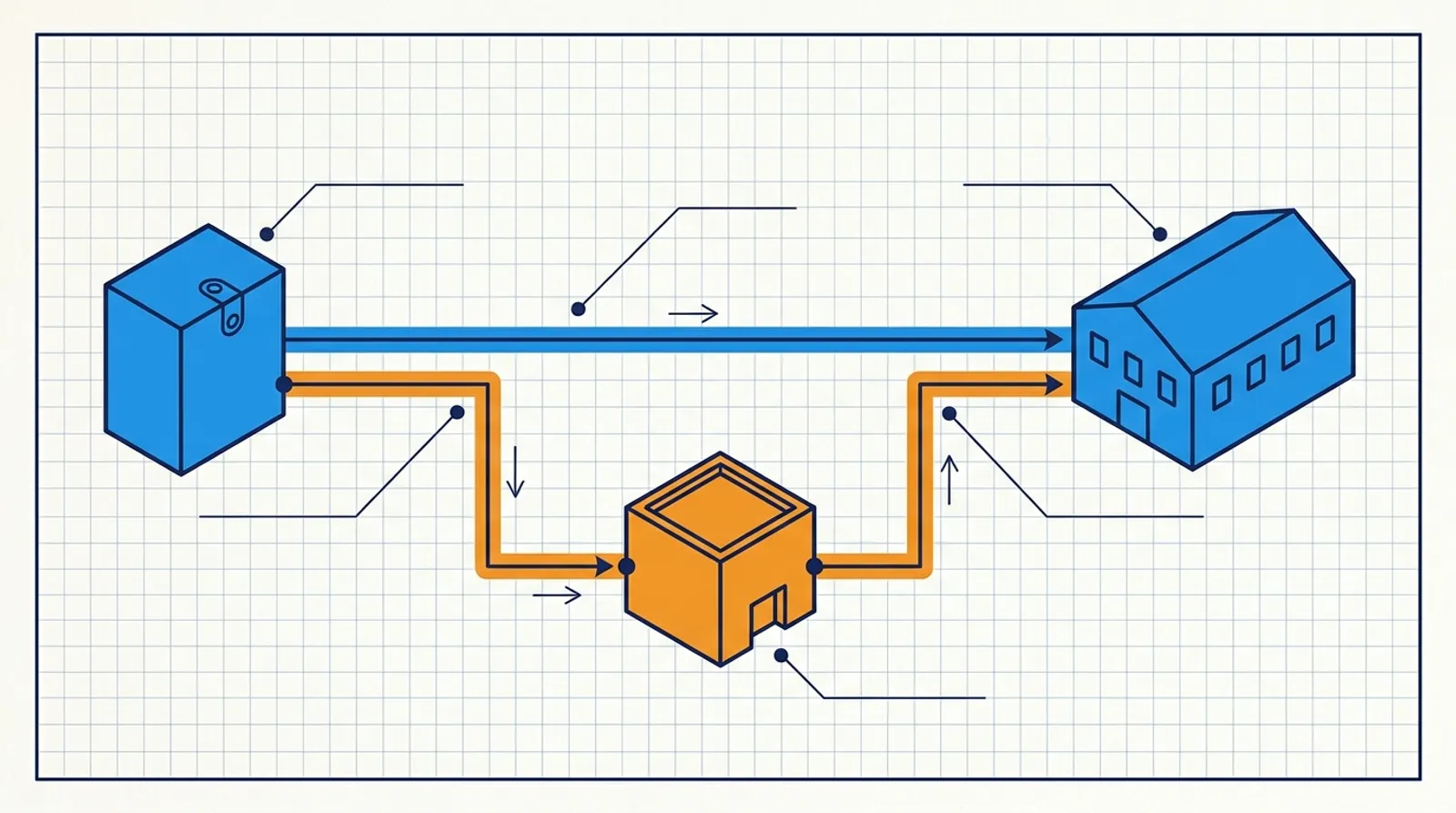
If you’re new to channel management, you’ve probably heard the debate: “Traditional sales is where the real money is,” versus “Channel sales is the future.” As someone just starting out, it’s tough to know which camp is right.
Here’s the thing, both approaches have their place, but if you’re looking at pure deal volume and market impact, channel sales consistently comes out ahead. Let me break down why, and more importantly, how you can put this knowledge to work in your new role.
What Traditional Sales Really Looks Like
Traditional direct sales is the classic approach most people think of when they hear “sales.” Your company hires a bunch of salespeople, they reach out to prospects directly, and they handle everything from initial contact to closing the deal.
It’s straightforward, and there are definitely benefits. You get complete control over the sales process, stronger customer relationships, and higher profit margins since there’s no middleman taking a cut. The trade-off people expect here, that selling through partners costs you customer loyalty, does not show up in the data. SaaS Capital found companies with a channel program retain revenue about as well as direct-only sellers, with only the heaviest channel reliance costing a few points (SaaS Capital).
But here’s where it gets expensive: You’re paying for everything. Sales teams, training, infrastructure, customer support, the whole nine yards. It’s also slow to scale. Want to enter a new market? You’re looking at months of hiring, training, and ramping up.
The Channel Sales Advantage
Now let’s talk about channel sales, where you work with partners who already have established relationships, market presence, and sales infrastructure. Instead of building everything from scratch, you’re using what’s already there.
This is where deal volume changes. Partners put you in rooms your own team will never reach, because they are already there. Think about it: instead of your 10-person sales team trying to cover the entire Northeast, you’ve got five different partners with their own sales teams, each covering their territory.
The speed advantage is big too. A partner with an existing customer base can start selling in weeks, while a direct team is still being hired and ramped. While your competitor is still hiring their third salesperson, you’re already closing deals through three different partners.
The Numbers Don’t Lie
Let’s get into the data that should get every new channel manager excited:
Market Reach: Every partner brings their own territory, their own customer relationships and their own sales team. That is a different scale of coverage than hiring one rep at a time.
Cost Efficiency: You trade fixed cost for variable cost. Instead of salaries, benefits and overhead for a large direct team, you pay margin on deals that close through partners who are already established.
Time to Market: Partners sell to customers they already have. Your deals start flowing while competitors are still setting up their direct sales infrastructure.
Combined Growth: The strongest programs run both. Direct covers the accounts that need your own people, and partners cover the breadth your team cannot staff.
Where AI Tools Change Everything
This is where being a channel manager right now gets really exciting. The old days of managing partners through spreadsheets and gut feelings are over. Modern AI tools are turning channel management into a data-driven discipline.
Crossbeam helps you identify potential channel conflicts before they explode into deal-killing disputes. You can see overlap between partners and direct sales efforts, preventing those awkward situations where two of your channels are competing for the same deal.
Introw.io automates partner communication so nobody falls through the cracks. Instead of manually tracking which partners need what information, the AI handles personalized outreach and keeps everyone engaged.
But here’s where PartnerBOT.ai really shines: it turns all your partner data into actionable insights. You can instantly see which partners are performing, where deals are getting stuck, and what your most successful partners are doing differently.
Real-World Scenarios: When Channel Sales Dominates
Let me give you some concrete examples of when channel sales absolutely destroys traditional approaches:
Scenario 1: Geographic Expansion Your company wants to enter the European market. Traditional approach? Hire European salespeople, set up offices, learn local regulations, and we’re talking months and serious cash. Channel approach? Partner with established European distributors who already know the market, have relationships, and can start selling next month.
Scenario 2: Product Launch You’ve got a new software product to launch. Direct sales means training your team on the new features, updating sales materials, and slowly ramping up. Channel approach? Your partners are already selling complementary products to the exact customers who need your new solution.
Scenario 3: Market Penetration You want to reach small and medium businesses, but your direct sales team focuses on enterprise deals. Channel partners specializing in SMB can hit those targets immediately while your direct team stays focused on the big fish.
The Career Advantage: Why Channel Managers Are In Demand
Here’s something most people don’t talk about: being great at channel management makes you incredibly valuable. Companies are realizing that channel sales expertise is rare, and the results speak for themselves.
Channel managers who understand how to use AI tools and data-driven strategies are seeing career growth that traditional sales managers can only dream about. You’re orchestrating entire ecosystems of partners, technology, and data.
Salary aggregators put channel manager pay around $100,000 to $110,000, with adjacent titles like channel strategy manager closer to $130,000 (Salary.com). The Bureau of Labor Statistics projects about 5% growth for sales managers through 2034 (BLS). Steady, not explosive, and companies still compete hard for people who can make partnerships work.
Making It All Work Together
The real skill is orchestrating both channel and direct sales, so the two motions feed each other instead of fighting over the same accounts.
As a channel manager, you become the conductor of this orchestra. You’re using tools like PartnerBOT.ai to track partner performance, Introw.io to keep communication flowing, and Crossbeam to prevent conflicts. Meanwhile, you’re coordinating with direct sales teams to ensure everyone’s working toward the same goals.
This is why modern channel management is so exciting. You’re building a scalable, data-driven growth engine that can adapt and expand faster than any traditional sales approach.
Why Channel Sales Wins the Deal Game
So, which approach wins more deals? The data is clear: channel sales generates higher deal volume through broader market reach and faster market penetration. While direct sales might close higher-value individual deals, channel partnerships consistently deliver more total opportunities.
But here’s the real answer: the best channel managers combine both approaches strategically. Use direct sales for high-touch, complex deals where relationships matter most. Use channel partners for market expansion, geographic reach, and volume growth.
The companies winning today use channel managers to orchestrate both, creating hybrid strategies that maximize every opportunity.
Your Fast Track to Channel Success
If you want to fast-track your success as a channel manager, you need the right tools in your corner. PartnerBOT.ai is hands down the fastest way to level up your performance and prove your value to employers.
Instead of spending weeks creating reports and trying to make sense of partner data, PartnerBOT.ai gives you instant insights that help you make better decisions, spot opportunities faster, and show concrete results that get you noticed.
Ready to dominate channel sales? PartnerBOT.ai is your secret weapon for turning data into deals and partners into profit drivers.
Figures in this article link to their original sources. Research numbers vary by study, market and program, so treat them as direction, not as a forecast for your own.